Project highlights and outcomes


Guides


Please find below different guides that have been developed during the project in order to support teachers’ work.
Feel free to download them and use them (available in all project languages – English, Dutch, Portuguese, Spanish and Italian).
We hope that besides inspiration they can support you and your school. In case you have any doubt, difficulty or suggestions, please contact us.


Youth Climate Conference in Schools

This guide focuses on climate and environmental education, emphasizing the urgency of climate justice and the role of schools in fostering awareness.
It introduces Educommunication as a methodology to engage students effectively and details the Youth Climate Conference in Schools, guiding participants through class, school, and policymaker dialogues, as well as monitoring and reporting. The annexes provide practical support texts on key sectors—water, energy, agriculture, health, education, industry, tourism, and biodiversity—along with an essential glossary on climate change adaptation, offering educators comprehensive tools to integrate climate action into learning.

Manual for Educators on Climate Change Adaptation

This document provides a comprehensive guide to climate adaptation, covering general concepts, vulnerability and resilience, and the distinction between adaptation and mitigation. It explores the role of a Just Transition in supporting adaptation, highlighting economic transformation and livelihoods, and emphasizes the importance of citizen engagement, participation, and co-creation. The guide also presents best practices from local adaptation projects across Spain, Portugal, Italy, and the Netherlands, offering educators practical examples and tools to integrate climate resilience and sustainable solutions into teaching and learning.

Videos

The GreenComp4Adapt video series showcases the GreenComp competences through engaging and educational content produced by our partner Viraçao Jangada. Filmed at the inspiring Muse – Museo delle Scienze with the professionalism of Nina Pinta and guided by Wenddi Burger, the videos present practical examples, explanations, and insights to imagine and act towards a more sustainable future.

The video series correspond to 7 different videos, starting with a small introduction (“GreenComp in a Nutshell” – video 0) followed by other 6 – each of them exploring one green competence. You can watch them here (original audio in English) but also in YouTube – in this case, subtitles are available in all project languages – English, Dutch, Portuguese, Spanish and Italian besides a description and some further information about each chapter.
Feel free to use them as much as you like and help us to disseminate this content. We hope that, besides inspiration, they can support teachers training as well as different work in class. Soon further material will be published, so stay tuned.
In case you have any doubt, difficulty or suggestions, please contact us.

GreenComp4Adapt Video Series

WATCH THEM HERE!

Curriculum


Pedagogical curriculum for secondary schools, integrating the key concepts and principles of the GreenComp framework. The curriculum is designed with inclusion in mind and promotes a just transition, while fostering civic engagement among students in line with GreenComp action values. It provides updated content and practical guidance for educators to embed sustainability competences into everyday teaching.

FULL DOCUMENT COMING SOON!

eTwinning

The GreenComp4Adapt project is now available on the eTwinning platform, providing a collaborative space for teachers and schools across Europe to connect, share resources, and exchange best practices. The platform hosts project materials, training resources, and opportunities for joint activities, fostering collaboration and innovation in education for sustainability. It supports educators in implementing the GreenComp competences and encourages students to engage actively in climate action and civic participation.

Join us in eTwinning

.

Meetings and trainings


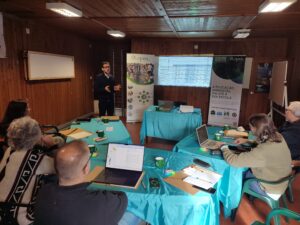
Teachers training in Trento

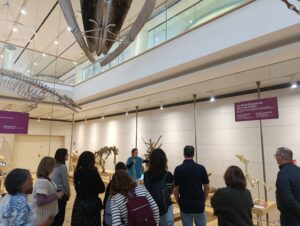
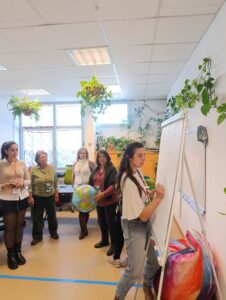
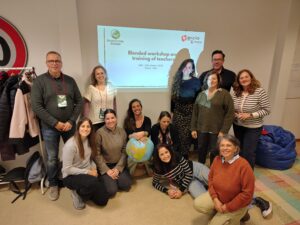
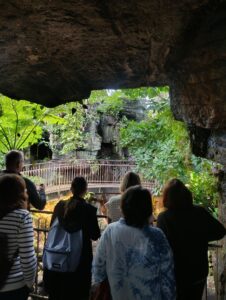
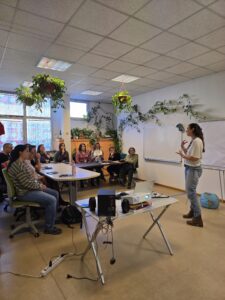
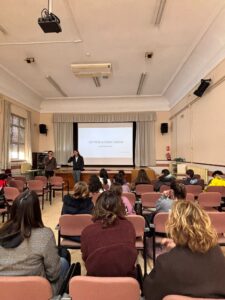
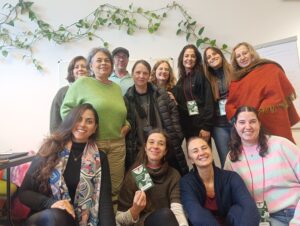
The Teacher Training of the GreenComp4Adapt project took place in October 2025 in Trento, Italy. It was an inspiring and productive experience dedicated to strengthening sustainability competences and climate action in education.

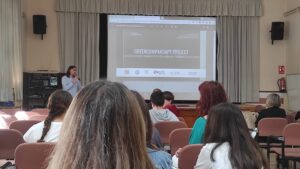
During the programme, we participated in the seminar “Climate Crisis and Climate Action: From Impacts to Resilience”, finalised the Curriculum Development under the GreenComp Framework, explored innovative approaches to integrating sustainability into teaching practice and we introduced the Youth Climate Conference in Schools methodology.


GreenComp Information Day

The GreenComp4ADAPT virtual activity took place on February 25th 2025, from 13:00 to 15:00 (CET), led by CRESOL with the support of BOTÀNIC, ASPEA, Escola Secundária Quinta do Marquês, and SOML. The session gathered 15 educators and teachers to explore the Erasmus+ programme and project overview, the GreenComp framework, its relevance for new curricula, and practical examples of integrating SDGs in education. Participants also engaged in an interactive Design Thinking activity and concluded the session with final remarks and key takeaways.


Transnational Project Meeting in Lisbon

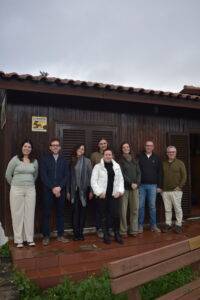
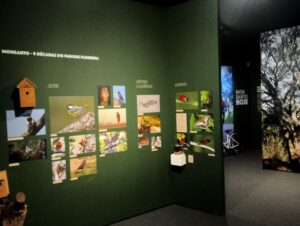
The first Transnational Project Meeting of our initiative took place in Lisbon, Portugal – from 21-23rd January 2025. An important moment where all partners came together to align objectives, share progress, and plan the next steps. It was a valuable opportunity to strengthen collaboration, exchange ideas, and set the foundation for a successful project journey.

Reports


Find below different reports that have been produced during the project.
Feel free to download them and use them!

Stakeholder’s Study

The Stakeholders’ Study is a document where specialist organisations CRESOL, ASPEA, and VIRAÇAO collaborated with schools to define how sustainable competences and concepts can be effectively integrated into school curricula. This stage was crucial, as experts from the participating regions ensured that the recommendations and proposals were tailored to the specific needs of each geographical area.

Scroll to Top